
Liberating Lit with Amanda Jones
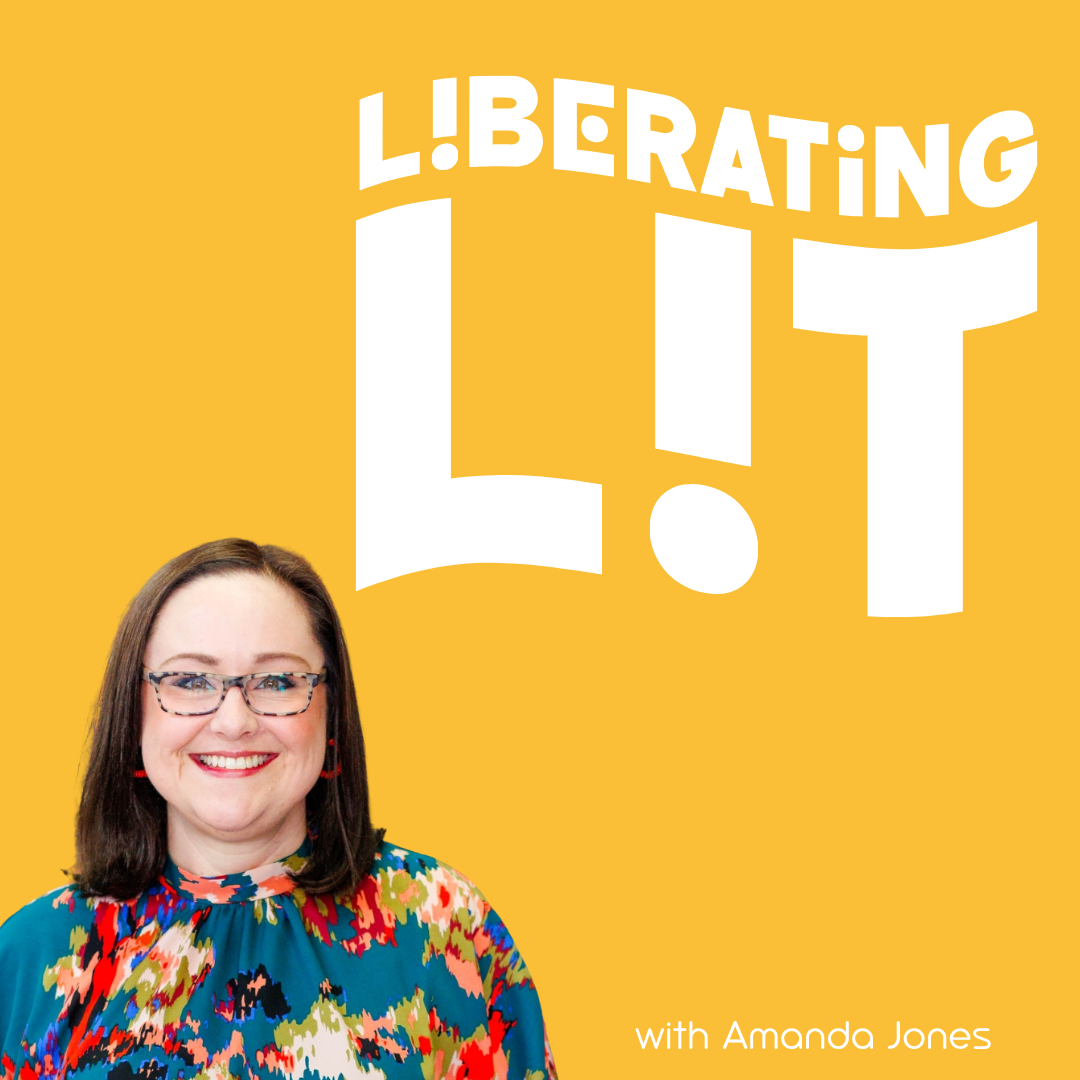
That Librarian Amanda Jones talks about the mental health realities of fighting censorship, influential leaders and literature that have guided her work, and why she believes the pendulum is swinging back in favor of the freedom to read.
Show Notes:
That Librarian by Amanda Jones
The Librarians film
Connected Librarians: Tap Social Media to Enhance Professional Development and Student Learning by Nikki D. Robertson
K.C. Boyd
Emily Drabinski
Courtney Pentland
Becky Calzada
“Fish Cheeks” by Amy Tan (short story)
Willie Carver Jr.
Sheila the Great by Judy Blume
Maybe He Just Likes You by Barbara Dee
Transcript:
Kelly Jensen/Liberating Lit (00:01)
She is that librarian. You know the one.
Amanda Jones is a librarian's librarian. She's an anti-censorship advocate. In addition to being featured in the Emmy nominated, widely screened, and highly acclaimed documentary, The Librarians, Amanda has been doing on the ground work to stop censorship in her small Louisiana community, put in tireless effort to ensure that Louisiana residents have as much access to libraries and library material as possible, stepping up as plaintiff in multiple lawsuits related to where and how people can speak about her, her work, and the work of other library and literacy advocates, and serving as a national face for the fight to preserve intellectual freedom.
Amanda is a champion, and she's also so much more than that. She's a mom and a wife, she's a friend and a confidant, she's a traveler and a reader and a writer. She's a school librarian and educator who has earned numerous accolades for how she sees and engages with every student in her school. She's also got an excellent sense of humor. Amanda is that librarian because she has to be. No one is coming to save us, and we have to be the ones to be that librarian or that advocate. We're the ones we're looking for.
I've been lucky to know Amanda for the better part of the 2020s. I was the first to tell her story, and since that time in summer 2022, I've watched in awe at how she has stepped into this work and how she does so in a way that inspires and encourages others to take on the label of that librarian. I've also watched as this work has weighed heavily on her, as she's been open and honest about the mental health tolls that advocacy can take. But Amanda continues, and she continues in no small part because of the incredible community that she's fostered, who care deeply about her as Amanda, the whole of who she is, both inside and outside of her role.
As a leader in intellectual freedom. Amanda, I'm so honored to have you here to talk.
Amanda Jones (02:01)
Yay, the honor is mine to get to talk to you, Kelly. You know I’d talk to you all day every day.
Kelly Jensen/Liberating Lit (02:07)
Tell me a little bit about who you are and what you do.
Amanda Jones (02:11)
Well, I used to say I'm just a librarian, but now I realize none of us are just librarians, so I don't say I'm just a librarian anymore. But I am a middle school librarian, and I am starting my 26th year at the same school that I attended as a child. I have numerous grand students of kids that I taught, and I work with several coworkers that are former students. So I think I have the best job in the world being a school librarian.
I'm also the kind of person that believes so wholeheartedly in literature and literacy and kids and windows and mirrors and if I feel like someone's gonna threaten that to my students or my community at our public library, I'm gonna say something. I don't know, I'm just, look, Kelly, I'm just living every day as it comes and trying to navigate all of these things that I've been throwing my way, because I didn't ask to be in the front and center and it's really weird to me to be front and center. I don't like it. But also, I wouldn't change anything. I mean, there's no regrets. It's a blessing and a curse.
Kelly Jensen/Liberating Lit (03:23)
That leads into my next question, which is what was the spark? What really got you into advocacy?
Amanda Jones (03:30)
I think it all goes way back before I even started making like the little waves in my community. I think it all goes back to, I think the Texas FReadom Fighters lit a fire in me. I remember first hearing about censorship issues in Texas from Becky Calzada and Carolyn Foote and Nancy Jo and all of the Freedom Fighters.
I was seeing all the positive campaigns that they were doing to counteract some of the disinformation and misinformation. And so that kind of sparked me and I started speaking out against it before it even happened here. I remember Carolyn saying, you know, you have to be proactive so you don't have to be reactive. Her saying that really was the first spark. And then I started speaking out and I remember I did a panel with Nikki Grimes, amazingly talented author Nikki Grimes. I remember telling her we have to be careful of censorship and be on the lookout and I kept saying it's not if it's when. I didn't realize that a few weeks after I said that to her, it was gonna happen to me.
Dr. Anne Nauman, who recently passed away, was my censorship teacher in college. And she put that spark in me, too. We must stand up for intellectual freedom. I don't know. It's just innate in me, I guess.
You either are a librarian or you're not. I feel like you either have the library heart, or you don't. And so any librarian worth their salt is going to be someone who's going to be the best they can in their profession. And that's just the driving force I have behind everything.
Kelly Jensen/Liberating Lit (05:17)
Advocacy comes with tremendous personal price. Anyone tuning in who has seen the documentary, The Librarians, or who has read your book, That Librarian, saw what you went through for speaking up at your local parish library board meeting to defend access to literature. But one thing that I don't think anyone talks enough about is the ongoing mental health toll it can have. Can you talk about your mental health, how and where you've experienced both the highest of highs and lowest of lows, and what sort of personal knowledge you've had to build in times of crisis? What sort of systems, if any, have you had to develop?
Amanda Jones (05:56)
Well, I was very lucky very early on, way back in 2018. I remember I read Nikki D Robertson’s book about social media and professional development. She just talked about how we all are connected and we all work best with each other. So I really built up a professional learning network and starting back way back in 2018 that I feel has been what's been helping me and keeping me going through all of this.
I had never been to therapy before any of this started, and I've recently been diagnosed with PTSD. I'm very open and honest about it.
When I first started being targeted and harassed in 2022, I had to take a medical leave of absence for panic attacks. People were like, oh, just get off of social media. But when you live it, you can't escape it. It's, you know, in my community. People were approaching me in public. People were sending me emails and messages and friends were sending screenshots to me like did you know that your elected official is saying this or did you know that your former friend is saying this? That takes a huge toll on your mental health. It was severe depression at first, and as I wrote about in my book, I lost huge chunks of hair and I lost weight. I'm anemic–I'm still anemic.
The lowest of the lows was probably right at the very beginning. When it first happened, they started posting pictures of me saying that I was advocating anal sex for 11 year olds, which is something I've never done or would never do. I cried so much that my eyes swelled shut and I couldn't breathe. But people think, oh, that was just a dark time in your life, that one time. No, it's been four years and they're still harassing me.
One of the men I'm in a lawsuit with posts these weird rants on social media and he rotates pictures of me that he has on his desk in a frame. They post my address online. They're still trying to call my bosses and get me fired. So the lowest has been, you know, just not. I think when initially my court case was dismissed, that was a really low time for me because I didn't see any light at the end of the tunnel. I was in the depths of despair as Anne Shirley would say, the depths of despair. But I think it just ebbs and flows.
I'm very honest with the fact that I'm in therapy now and I think that anybody that's going through this needs to be in therapy. And my therapist and I were just talking about this. It's either really high for me or really low. I'm in constant fight or flight. Like I never know because just a few weeks ago it came out all at once that the [state] Supreme Court ruled in my favor that the local judge said that one of the men I'm suing has to pay me $54,000. So the local news did a huge news story about it, right? And I'm like, yay. But what comes with that is renewed harassment. So then they all start coming out of the woodwork posting about me and all the community pages and the same thing happened a week later when the [The Librarians] documentary was nominated for an Emmy, another news story.
Can anybody be happy for me? No, everybody's talking about how horrible a person I am. And so it's like either high or low.
But I can't say that anyone needs to feel sorry for me. I have had some highs. I've gotten to meet Judy Blume. Like how much better do you get than getting to me?
I recently went to the Obama Presidential Center and I was already planning on going because I was headed to Chicago, United States, but at ALA, all the librarians were telling me they were in the presidential reading room and they saw my book. And so I researched, I was like, what does this mean? The fact that President Obama and Mrs. Obama chose my book as one of a thousand or so in the permanent collection in the presidential reading room, like I'm trying not to cry to say it, like talking about it.
You go from like that high to, like, tomorrow I might go to the pharmacy to try to get some cold medicine and someone might call me a pedophile. It's like fight or flight, it's like up and down, there's never any in between.
Kelly Jensen/Liberating Lit (10:46)
Something that I don't think gets addressed as much as it should when it comes to advocacy is balancing doing what is morally right with protecting the vulnerable people in your life and in your case having a teenage daughter. Where and how have you seen being a library advocate support you as a parent? And where have you had to really reassess the ways in which your work may impact your kid?
Amanda Jones (11:10)
Something that really, really makes me angry about all of this is that I'm always referred to as that librarian, which is great because I am a librarian and I love that. But these people that targeted harass me or they say that I'm giving pornography to children, most of them don't even live in my community. I'm an actual parent of a child in my community.
So you have these outside extremists coming in and saying what I am and am not doing, these people that don't even know me, and they focus on protecting the children. I'm a mother as well. My child is in our school system (was in our school system). Our child was a patron of our public library. I have just a right to say as anybody else, not just as a librarian, but as a parent and as a lifelong resident of my community. So it's really angered me about this “protect the children” bull crap that they do.
We could also get off into the whole tangent about how if they really wanted to protect children, they would be worried about the phones and the internet and not random books their kid might stumble across in the library. But from the very get go, my daughter was 15 when this started, I was petrified. Because I have a lot of family that lives far off or friends that live far away, I was posting about my family on social media all the time. Here's my husband, here's my daughter, here's my parents, my nieces and nephews. I had to stop doing all that. So it went from being able to share with friends and family about my life to nothing more than surface level, on social media. I can't share those exciting moments about my child. She graduated high school and I wanted to shout about it, but I didn't want them to like be zeroing in on her. She's asked to come to meetings before library board meetings. I don't want them knowing what she looks like. Obviously you can look online and whatever but I don't want their nastiness around her at all.
These are people that were also messaging my 97 year old grandmother before she passed away. They have no qualms. They've gone on my sister's pages, social media messages, and I'm like, these people are so ugly and they have no qualms about it. I've had to lock down my life because of them for giving a speech at the public library. You know, that's just absurd to me.
But my child, fortunately I raised my kid right, and she chose her friends correctly. She was in band in high school in theater. It’s stereotypical but the kids in band and theater usually tend to be more inclusive and, I mean, having taught all of them at our school I can tell you that those kids are definitely more inclusive and nicer and friendlier. They all protect each other so I never really had to worry too much about my daughter finishing school. But yeah, it's always in the back of my mind I don't want her to go anywhere in public by herself
Kelly Jensen/Liberating Lit (13:51)
Yeah, I feel that and I really appreciate what you had to say.
The way that these people behave outside of those boardrooms, outside of those meetings where tempers can flare, where opinions can be loud and forceful, it doesn't stop there, is what I think a lot of people don't understand. That it filters into your personal life. These people research you and they look for any way that they can get to you. And often that is through your friends and your family who have nothing to do with whatever you're arguing about, but that's a soft spot.
Amanda Jones (14:31)
People don't realize, because I haven't talked about it very much publicly, one of my harassers actually tried to get a job as custodian at my school so he could have keys and access to me and my space. He's since apologized and given me a dollar. But yeah, at one point in time, I didn't name names, but at one point in time, he did try to get a job at my school. And I can only imagine. what that was for, because he doesn't live or work out here and his children didn't go to my school. These people are nuts so don't put anything past any of them. They're scary. They talk about where we should go, and how God should wrap a millstone around my neck and drown me in the pits of hell. They say that to me in public, too. Nowhere is safe in my community. I don't go out anywhere in my community unless I know I'm going to have multiple friends with me. I try not to go out in my community at all. If I'm going out like a day, night or out, you know, my family will travel a town or two over. I'm even worried about going through drive-thrus like McDonald's using my app because it says my name and I worry that they'll spit in my food. Like it's just constant fear of harassment around here.
I told my friends this because I finally ventured out in public a few weeks ago and we went to a a local brewery. And I said, watch, somebody's going to say something to me at some point tonight. And they're like, no, no. Somebody said something to me, and I will say it was something good. It was something good, but you never know. It's very rarely something good, but I was recognized and someone said something to me. And even though what she said was nice–she said she liked my book–it petrified me and now I don't want to go back out in public because I was recognized.
Kelly Jensen/Liberating Lit (16:15)
I think that speaks to what you said earlier too about PTSD. You are not the first school librarian who has been through long term censorship stuff to have been diagnosed with that very thing. and I don't think it gets talked about enough.
Amanda Jones (16:35)
It really doesn't. I mean, one of the heaviest burdens–I don't want to say burden, but I don't know how to describe it. One of the heaviest aspects of this is when I'm contacted by other people that it's happening to. It weighs on me because I know the mental health struggles that they're about to go into, if it's just starting for them. If they're in the middle of it, know what they're going through. I know that nothing I say is going to make it better.
That's a huge burden to me. There's nothing I can say or do to take it away from them. There's nothing I can say or do to make it better. Because I can't even make it better for myself. That is a heavy burden and that also affects my mental health. Not that I want anybody listening to not feel that they can reach out and talk to me. You can always reach out. It's a very heavy burden. I think if I knew what to say to them or maybe if I specialized in counseling or a but I never had counseling classes with my library classes, so I don't know how to navigate that with other people.
Constantly people are crying. Every time I go to a book signing, someone approaches me and says it has happened to them and they cry. And I just, that's a lot.
Kelly Jensen/Liberating Lit (17:47)
It is. It is a lot. And when you are a face for a movement, you carry that weight. But I also and I say this to you both as somebody who respects your work and as somebody who, you know, I consider you a friend. I think people turn to you because sometimes they just need to say it to somebody who gets it. Even if you can't take that pain away, even if you can't change what the future is going to look like for them. That they can say it to somebody who has been there is a thing that can make such a huge difference.
Amanda Jones (18:23)
And that's why I will never turn anyone away who reaches out to me. I will be so busy, but I will stop and take the time to say, you know, I don't have a lot of answers, but maybe try this and try that.
It's funny because I usually go have you read Kelly Jensen's articles today? That's one of my first. It's like my go-to. Have you read Kelly's articles so you know what's happening all across the country and you can recognize the size? My second piece of advice is always have you looked at the PEN America Field Guide to Harassment? Third, have you looked at Get Ready, Stay Ready online?
Have you looked at all of what you can do? Have you contacted EveryLibrary? you, you know, like I have all of these steps and I will never turn anyone away because just like because you know what no one ever turned me away and I was fortunate. I contacted you and John Chrastka and y'all never turned me away. I contacted PEN. I was never turned away by EveryLibrary or Book Riot, whereas I was turned away in my own community and so I will always try to be there for anybody. I don't know that I always have the best advice but I can tell you what I've got, and I can say you know there's there's ups and downs and take care of yourself.
I really have learned how to take care of myself, and I don't do it all the time. Like recently I learned that talk therapy wasn't enough for me. I had to start therapy and EMDR therapy. Because my therapist was like, Amanda, you're a little more traumatized than I can deal with. And so she referred me and now I have a new therapist. Because I needed more.
I do try to take care of myself, but I mean really what can you do? It's a lot. You can do the sound baths, I do those too. You can do the yoga and the meditation. But when you can't even go out to get groceries in your own community, it still sucks, so.
Kelly Jensen/Liberating Lit (20:28)
Absolutely it does.
Amanda Jones (20:31)
It's not woe is me, though. I don't want to be woe is me, Kelly. I don't want to be all woe is me. Because I do see that, the pendulum is starting to swing back because of the fact that none of us have been quiet.
Kelly Jensen/Liberating Lit (20:41)
I agree. I think that one thing that advocates are not good at and something that has come up in a number of these conversations where we can do better is celebrating those wins and really highlighting those wins and like allowing ourselves to sit with the win instead of immediately going to the next thing.
Amanda Jones (21:02)
That's exactly what my attorney, Alison Mills said. Because the minute I heard that I had won in court and I was getting money back and I'm like, all right, when do we start deposing them? She's like, first soak in your win because wins are few and far between these days. That really hit me and I was like, you know, you're right. So I'm trying to revel in those moments like when there are positives.
A few weeks ago, I saw Keri Lambert speaking at a PEN America gala. And Keri Lambert, for people who don't know, is one of the Rutherford County Library Alliance founders. I met her years ago, right when they were getting started, and said hey, if you ever need anything, let me know.
I'm so proud of Keri, and I didn't even teach her anything, but I'm like, I'm so proud of you, you're my little kid and I taught you. I'm looking at her and I'm thinking, that's a win. Here, Keri, I met her three years ago, she was very worried about her community and she still is. And her community is still in shame. It's the whole thing over in Rutherford County, but she's fighting her butt off. To see her give a speech at PEN was like, that's a win and we need to revel in that. And so all day, I just thought about what a win that was for Rutherford County. It wasn't even a win for my community, but to me, a win for one is a win for all. I'm happy anytime, anytime anybody gets an award or anybody is speaking out. I'm like, yes.
I know I say this a lot in interviews, but I did hear Stacey Abrams say that we have to measure success and progress and not victories. So I do celebrate the wins and it is great and I do love to enjoy the wins. But just speaking out is progress because you've changed somebody's mind in that audience.
Kelly Jensen/Liberating Lit (22:56)
Or you've made them take action when they otherwise would not feel comfortable doing it. And and that's huge too.
Amanda Jones (23:04)
I got a message this week on LinkedIn, and it was like, she said she read my book, and that it encouraged her to speak out, so she's been fighting in her district. And so to me, I'm like, well, it's all worth it if at least one person read and said, I can do this, too. Hopefully every time we speak out, even if it's not a win, someone's at least talking and spreading the message.
Kelly Jensen/Liberating Lit (23:31)
Who do you learn from?
Amanda Jones (23:34)
Everybody else. I've never had an original thought. I always look at what everybody else is doing. I learned from so many people.
I've learned over the past few years to listen from K.C. Boyd. She taught me to listen. I think there's a powerful message you can learn from Emily Drabinski. She never, she never went low. She's never gone low when they've gone low against her. She's unapologetic for her beliefs, but she's quick to tell you what's best for the profession, but she's level headed. So I would say I learned level headedness from Emily. I learned empathy and part of doing what's right for my friend Courtney Pentland, who used to be AASL president, and Becky Calzada. They're always always walking in the light, you know what I'm saying? I don't know what that even means, but they are always walking in the light. They're always so sweet and wonderful and they never get stuck in the pits with everybody else. They look for the positives. I learn from everybody around me.
Kelly Jensen/Liberating Lit (24:59)
If there's anything you could tell your 2021 or 2022 self from the perspective of yourself right now, what would it be?
Amanda Jones (25:09)
Ooh, I would tell myself to start documenting. To start documenting because it took me a while to start documenting things that I wish I had documented. But I think I would tell myself a storm is coming. Just put your head down, keep going forward, and don't change anything.
And, you know, there'll be some positives. I think I would have told myself, you're gonna feel some days like you wish the Earth would split open and just swallow you whole. But then there's gonna be some days when you're getting to talk to Amy Tan and you're getting to tell Amy Tan about the short story “Fish Cheeks” that you used to teach of hers to all your seventh grade students, and it was one of their favorite lessons. Like, there's gonna be lows, but there's gonna be highs too.
Kelly Jensen/Liberating Lit (26:02)
What is it that keeps you going?
Amanda Jones (26:06)
I think people always say it's cliche to say it's the kids. They're like, it's a cliche, it's the kids. I mean, but I have a 19-year-old. That is why I keep going. You know, I want a better world for her. I want a better world for her kids. I want a better world for my nieces and nephews. I want a better world for my students. That keeps me going.
I would be lying if I didn't say that pettiness got me going sometimes. Let's be honest, we don't talk about that enough. I mean, when there are people saying the most horrific things about you all over the internet and in person, and you're not allowed to say anything back because you're in a lawsuit or because you're just a better person and you don't want to get out of their level, that's heavy. That weighs you down, and so when I can get a zinger every now and then the internet without looking like I'm getting a zinger, I'd do it, I'll be honest.
I was just telling my friend Willie Carver Jr., he's an author and a former educator, a former teacher of the year in Kentucky. He's from Appalachia, and so he talks a lot about how we have to be sure we're not making fun of the same people. Because when they start, we talk about book bans, whatever, we know what political party is pushing the book bans. And we know there are stereotypes and some of the stereotypes I see in real life all the time. But he said, you know, we have to be careful that we're not putting people down. And so I've been working really hard lately. So I am petty, but I'm trying hard not to stoop down to their level. When someone calls you fat online, like, she's the fat librarian, and it's a man that weighs as much as you, of course you want to post a picture of him online and be like, sir, come on now. But like you can't because what is that teaching children? So I just move on with life. It is what it is.
Kelly Jensen/Liberating Lit (28:32)
What's been one of your proudest achievements during this era of censorship? And if that's a tough question because I know it can be, what about the biggest pinch me, this is my life moment?
Amanda Jones (28:43)
Well, I think one of the biggest successes we've had in the censorship movement in my community is we haven't had a single book removed. Like to me, that's success because they came in wanting to ban books and while they have relocated some, we fought. We fought so bad and they have relocated some. They're still in the library and I know where they're located in the adult section is not optimal, but I'm like, at least it's not removed. I'm still fighting to have those books moved back to where they should be.
But to me, the fact that we haven't had one completely banned is a win.
And I guess a pinch me moment was when I was in the back of Judy Blume's Mini Cooper with my knees up to my chin because I'm tall and it's a Mini Cooper. And my attorney and friend is sitting next to me because I brought her with me to meet Judy.
Judy had just signed my original Sheila the Great book from when I was a kid that I brought with me. And she's like, Amanda, what is this mess? It's all yellowed and gross. And she signed my book and we're in there. And I'm texting my friend Alison, who is literally right next to me with her knees up and her chin going, we are in the back of Judy Blume’s Mini Cooper while her husband is driving like a bat out of hell. Like, you can't beat that.
Kelly Jensen/Liberating Lit (30:10)
That is an absolute moment and such a beautiful visual. Such a beautiful visual.
Amanda Jones (30:17)
It was even funny because we went out to dinner in Key West and Judy and her husband George had already walked through to go eat and the guy that was the host goes, is that a famous lady?
I was like, yes, that is Judy Blume. He goes, the writer? And I was like, yes. And he looked no more than 18, 19. I'm like, even the teens know who Judy is.
Kelly Jensen/Liberating Lit (30:39)
Absolutely. Of course they do.
So you've talked about this a little bit so far, but I'm gonna ask it more bluntly, which is what kind of self care do you practice?
Amanda Jones (30:56)
As far as self care goes, I have the best massage therapist in the world. So I go to her every so often. I have started EMDR and parts therapy with my therapist is a form of self care.
I like to go and visit friends and be around friends as much as possible. I have been doing some meditating, some sound bath stuff, and my friend Dr. Adrienne Chideautook me to a sound bath session in Chicago. It was like an hour, and I was like, I don't know how I feel about this. She's like, trust me. And I really did feel better., I've been listening to sound baths in my headphones,
I just try to stay off the negative internet space and try to be around friends, drink more water, and eat healthier.
Kelly Jensen/Liberating Lit (32:11)
What advice or thought would you want to impart on somebody just getting into literary advocacy?
Amanda Jones (32:19)
I would say, and some people have heard me say this and they don't like it when I say it, but I think that if you're young and just starting out as a librarian or educator, you should tread lightly.
There is a safety net, not always, but there is often a safety net to being older (and as I say vintage). If you're a school librarian and you have 20, 25 years in like I do, and you know your rights, and you've, and I don't wanna sound pompous, but if you've gotten some awards or you've won some grants for your school, they tend to look at you a little more favorably. And so j Just be very careful. That's not to say don't speak out, but just do it in a safer way. Be careful. Make sure you read those social media policies and you are dotting your I's and crossing your T's. Be very careful.
I would also say that before you do any advocacy work, you should really read PEN America's Field Guide to Harassment. You should lock down your socials. As far as social media, I had all my family linked. It's like, you can connect your family to Facebook. Unlink everybody you're related to. Lock down and turn all your past posts to friends only. Weed through that list of friends. Just be very careful because anything that you say can be taken out of context.
The next thing I would always say is no matter how much you want to just really go at someone for being awful to you, you have to rise above it. Because we are judged on a tougher scale. Apparently, these people that harass librarians can do whatever they want and it's fine and dandy, but if you call them out on it, you're horrible. So you can't even call them out on it or you're a horrible human being. Be very careful about what you say online. I've seen so many people say things in moments on social media that have ruined their careers. I know that has happened a lot with the Charlie Kirk situation. A lot of people have been fired for things they said online. Just be very careful about what you say online.
Kelly Jensen/Liberating Lit (34:21)
I'm gonna ask that question again, but change it just a tiny bit. what advice or thoughts would you want to impart on somebody who's been doing this work for a long time?
Amanda Jones (34:34)
I would say that I probably don't have the best advice because I don't take my own advice.
Just kidding.
No, in fact, the two women who, the three of us who founded Louisiana Citizens Against Censorship, have been talking about this recently because we've all had things happen in our lives that have weighed us down while we're trying to fight this fight. And there gets to be a point where it's like, you start to see the hate overtaking.
When you start to see the hate overtaking, it's time to take a step back. It's time to get off the line, do some meditation, take some deep breaths, drink some water, take a walk, touch some grass, and don't say anything that you are gonna regret later on in life. Because even us vintage people who have been around for a few years do this, we still say stuff sometimes, we're like, God, why did I say that? But you have to log off sometimes and just not worry about it.
That happened to me in the spring. There were so many people asking can you be here? Can you do this interview? Can you speak to this person? I have this friend that needs talking to you. And then I'm trying to teach and then I have my own issues and then my own family and like, and I had to just step back, you know?
We had a library millage because they're still trying to cut funding in our library and we had a meeting. And my therapist was like, Amanda, is the outcome going to change if you go? And I said, no, I already think I know how the votes are going to go. She's like, then just stay at home.
We're in a group text. I can message talking points behind the scenes. And that's what I did. I don't have to be at every single library board meeting. That's what makes me run out of steam.
So please take care of yourself. And if you're feeling like, hey, maybe today's not the day I need to speak out, listen to yourself. Listen to that internal voice. It's okay, the world's not gonna end and nobody's gonna think less of you. That's still a work in progress for me because I'm still like, I have to be there, I have to lead the movement. But I really don't. Because if you're a good leader, you encourage and you try to uplift everybody else around you. And then they take over when you're not there. And that's what's happened. So I don't know why I'm worrying.
Our alliance has grown in leaps and bounds and they say stuff way better than what I would have said if I had gone. So give yourself credit. I'm still trying. I'm still trying to let that sink in what I just said, sink in to me. That's what I worked on in therapy this week.
Kelly Jensen/Liberating Lit (37:22)
It's really good advice and it is really hard advice.
Amanda Jones (37:26)
It is hard advice. [My therapist reminds me that if] I have two battles coming up and only have energy for one, which one do you choose? That put it in perspective to me. I was like, okay, I only have enough to give for one. Sometimes you just have to make priorities and then you have to think, I could be sitting on the couch with my kid watching a movie together. And if somebody else is gonna be there, give yourself grace and don't go to that meeting that one time.
Kelly Jensen/Liberating Lit (37:50)
You have to remember that that person who is in that boardroom is there because they can be the one in that boardroom and they're glad to be able to help you not have to be there.
Amanda Jones (38:16)
Exactly. And I'm really fortunate that we've built an alliance that is so close-knit and we've built up our talking points and we're all on the same page and they could tell. Like I was like, y'all, I don't know that my mental health is up for it, and they're like, don't go, we got this, you know. It was just me telling myself that. We're our own worst enemy sometimes, really.
Kelly Jensen/Liberating Lit (38:38)
We really are.
So I want to end with this question, which is a question I end every one of these interviews with. Because this is a podcast about liberating literature, and I use the word liberating in all senses of the word, I end each conversation by bringing it back to books. Can you talk about a book that's been influential in your life? This could be a book that has inspired you, or it's a story that's just stuck with you for some reason.
Amanda Jones (39:07)
See, I should have prepared for this.
Okay, I'm gonna bring up a book that a lot of people bring up that I've talked about. I have talked about a book called Maybe He Just Likes You by Barbara Dee. And Barbara Dee is, to my students, what Judy Blume was for me when I was that age. Shedoesn't shy away from difficult topics, but she writes them with such care for the target audience of 10, 11, and 12 year olds. And she just takes such good care. She has tons of books, but I always go back to Maybe He Just Likes You because for people who haven't read it, it's about a little girl and she's in, I forget what grade, fifth or sixth grade, and the little boy in her class keeps touching her inappropriately and making inappropriate comments. It's about consent.
That was one of our reading challenge books, and you know, those people went up in arms. They're like, how dare she teach consent? First of all, I'm not teaching consent. It's just a book in the library. But second of all, where do we get to the point in our society that we don't want to teach children that it's okay that they don't have to let people touch them? Like what is wrong with that book? But I do always go back to that book. And Barbara Dee, and I think she's got a new book coming out in the fall, she just writes about whether it's, you know, unwanted touches or whether it's opioid addiction or she just writes with such care for these kids. And so I just love her books and I will always champion Barbara Dee.
And I will tell a funny story, you can cut this out, but a funny story. I was speaking at the New York Public Library and I was with Peter Parnell and the two of us were in conversation. And when they had the lights on you, you can't see out in the audience. It was dark and the lights came back on and I see this woman stand up in the middle of the crowd and I looked and I was like, who is that? I go, it's Barbara Dee. She started walking down the front and was like Chariots of Fire music was playing. I was like, it's Barbara Dee!
I had never met her in person before. So we've had, I've had this like obsession, this like love affair, side of love affair with Barbara Dee from afar and I got to meet her. at the New York Public Library. It was one of the greatest moments of my life. I take my yearbook picture with one of her books every single year and for like eight or nine years now. She is it for middle grade for me.
Kelly Jensen/Liberating Lit (41:45)
We are absolutely positively leaving that in. Amanda, thank you so much for joining me on this episode of Liberating Lit. I appreciate your time and your insights and all of the work you do and just how human you are through the whole process so so much.
Amanda Jones (42:03)
Look, thank you for having me. You know I can talk to you all day every day. But thanks for having me and I'm so glad you have this podcast and that you asked me to speak. If anybody is out there and you're feeling, you know, sad, just keep thinking: we're in this big pendulum and it's swinging back, I think. So tomorrow's a new day and I have hope for the future.
